
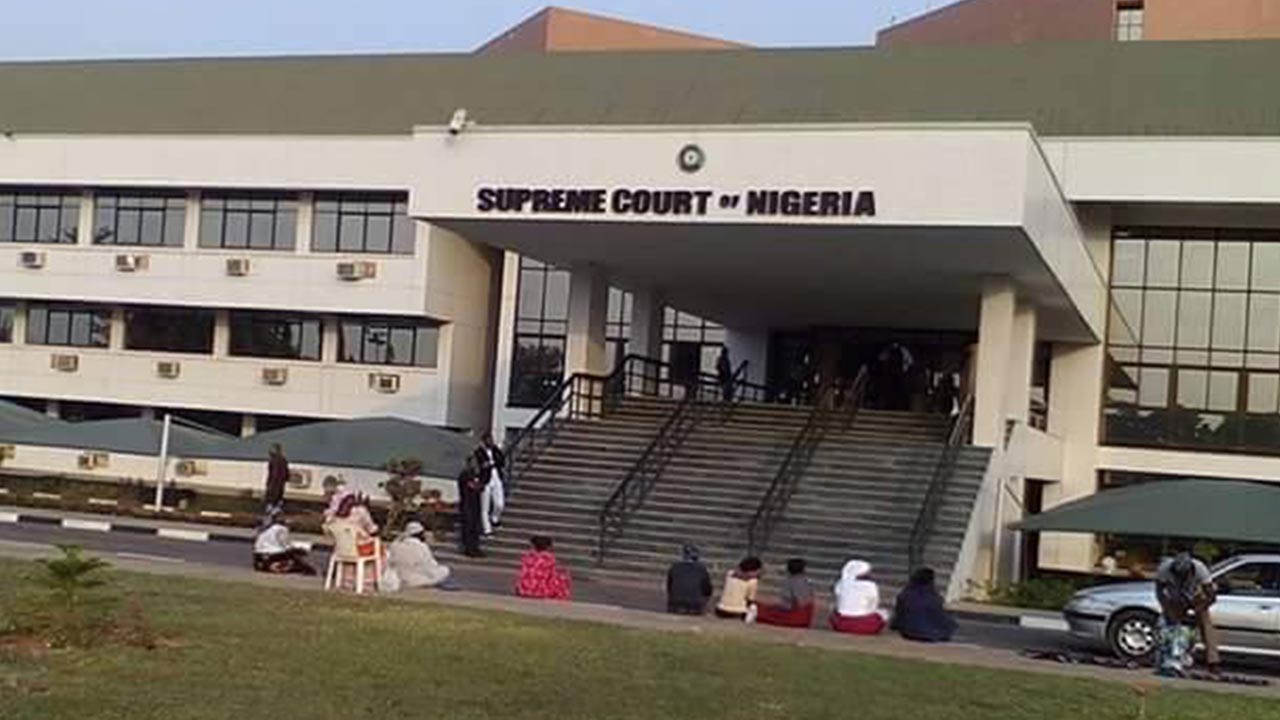
Reactions have continued to trail the Supreme Court’s judgment in the Nestoil dispute concerning a receiver’s attempt to challenge the company’s legal representation, a ruling that has sparked renewed debate on insolvency practice and the limits of receivership powers in Nigeria.
While some commentators view the decision as a reaffirmation of settled legal principles, others have described it as a watershed moment for insolvency jurisprudence and broader adjectival law in Nigeria.
In his judgment delivered on 10 April 2026, Justice Emmanuel Akomaye Agim strongly condemned the application brought to disqualify the company’s legal representatives, describing it as “clearly a scandalous and despicable engagement in the gross abuse of the process of court.”
The apex court held that the Court of Appeal had abdicated its judicial responsibility by granting the application, thereby enabling what it described as a blatant abuse of court process.
The court further questioned the legal basis for a receiver or creditor-appointed manager to interfere with the choice of counsel by a defendant company.
It noted that it was “surprising that learned counsel for the 1st and 2nd respondents could contend that the appellant and the 3rd to 5th respondents, defendants in their own suit, have no power to appoint a lawyer of their choice for their defence merely because a receiver-manager has been appointed to recover debts owed by them.”
Justice Agim held that it would be fundamentally inconsistent with fair hearing principles for a receiver, acting for a creditor, to also control or appoint legal representation for an adverse party in litigation.
He described such an arrangement as an inherent conflict of interest, stressing that the powers of a receiver do not extend to determining or controlling legal representation for opposing parties in a dispute.
The judge further emphasised that such powers neither arise from nor are incidental to receivership, warning that allowing such control would undermine the independence of legal representation and the integrity of adversarial proceedings.
The dispute arose after Nestoil Limited and Neconde Energy Limited challenged a Court of Appeal decision that had disqualified their legal team on the application of counsel appointed by a creditors’ receiver.
The companies argued that the receiver, appointed by creditors, had no authority to determine who represents them in proceedings instituted against them.
In allowing the appeal, Justice Mohammed Baba Idris held that where a dispute concerns the validity or scope of a receivership, a company cannot be stripped of its residual authority to act through its board of directors in defending its corporate interests.
The court ruled that legal representation chosen by a company’s directors cannot be rendered incompetent merely because a receiver has been appointed over certain assets, reaffirming that receivership does not extinguish a company’s capacity to defend itself in court through counsel of its choice.
